DIY Toilet Repair — Solving Common Issues and Disassembling for Repairs
Introduction

When it comes to household repairs, being able to fix a toilet is a valuable skill to have. A malfunctioning toilet can be frustrating and inconvenient, but with some basic knowledge and a few simple tools, you can often fix common toilet problems on your own. In this article, we will guide you through the process of repairing a toilet, focusing on the most common issues and how to troubleshoot them.
1. Flushing Mechanism
The flushing mechanism is essential for proper toilet function. It consists of a flush handle or button, a chain, and a flapper valve. If you experience weak flushing or the toilet won’t flush at all, the flapper valve might be the culprit. Often, adjusting the chain’s length or replacing the flapper valve will solve the problem. Make sure to turn off the water supply before working on the flush mechanism.
1.1 Adjusting the Chain
Start by checking the chain’s length — it should be neither too loose nor too tight. If it’s too loose, the flapper valve won’t lift properly, resulting in a weak flush. Adjust the chain by moving the hook to a different link until it’s just right.
1.2 Replacing the Flapper Valve
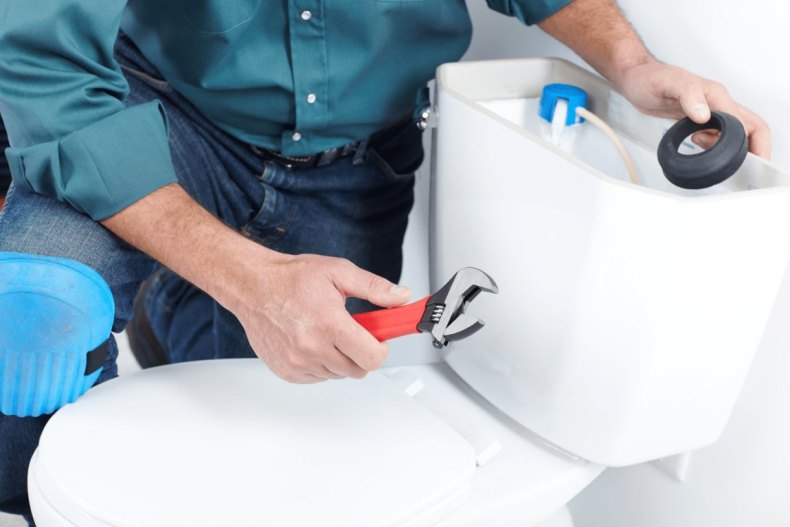
If adjusting the chain doesn’t solve the issue, the flapper valve might need replacement. Turn off the water supply and drain the tank. Remove the old flapper valve and take it to a hardware store to find a suitable replacement. Install the new flapper valve according to the manufacturer’s instructions, and test the flush.
2. Tank Filling Problems
If your toilet takes a long time to fill or the water keeps running, there might be an issue with the fill valve. Most modern toilets have a fill valve with a float-cup mechanism. Adjusting the float cup’s position or replacing the fill valve can solve the problem.
2.1 Adjusting the Float Cup
Open the tank lid and locate the fill valve. The float cup should be attached to the top of the fill valve assembly. You can adjust the float cup’s height by sliding it up or down the rod. If the water level is too high or too low, adjust the float cup accordingly.
2.2 Replacing the Fill Valve
If adjusting the float cup doesn’t solve the issue, you might need to replace the fill valve. Turn off the water supply and drain the tank. Disconnect the water supply line from the bottom of the fill valve. Remove the old fill valve and install the new one following the manufacturer’s instructions. Reconnect the water supply line and test the toilet’s filling.
3. Leakage
If you notice water around the base of the toilet, there might be a problem with the wax ring seal. The wax ring creates a watertight seal between the toilet and the floor. Replacing the wax ring can often solve the leakage problem.
3.1 Replacing the Wax Ring Seal
To replace the wax ring seal, start by turning off the water supply and draining the tank. Disconnect the water supply line and remove the toilet from the floor. Scrape off the old wax ring and clean the toilet flange. Place the new wax ring on the flange, and carefully reposition the toilet, ensuring it sits evenly. Tighten the bolts, reconnect the water supply line, and test for leaks.
Conclusion

By following these troubleshooting steps, you can often repair common toilet problems on your own. Remember to always turn off the water supply before working on any part of the toilet. With some patience and basic tools, you can save money and fix your toilet yourself. However, if the issue persists or you’re unsure about the repair process, don’t hesitate to seek professional assistance.
Device and principle of operation of a toilet bowl
The toilet bowl is an essential sanitary fixture in any bathroom. It is designed to effectively remove waste with the help of water. Understanding the device and principle of work of this plumbing fixture will help you in carrying out repairs and troubleshooting common malfunctions.
In most modern models, the flushing mechanism of the toilet bowl is located in the cistern, which is mounted on the wall or connected directly to the toilet bowl. The cistern contains a water supply valve, a float, a drain valve, and a flushing button or handle. All these components work together to regulate the water flow and flush the waste.
The fill valve, also known as the inlet valve, is responsible for supplying water to the cistern and maintaining a constant water level. It is connected to the water supply pipe and opens when the water level drops below a certain point.
The float, attached to the fill valve, rises and falls with the water level. When the water level reaches the desired level, the float shuts off the water supply valve, preventing water from overflowing the cistern.
The flushing mechanism is operated by either a button or a handle. When pressed, it lifts the drain valve, allowing water to flow from the cistern into the toilet bowl. The force of the water creates a siphon effect, pulling the waste down the drainpipe and into the sewer system.
The drain valve, also known as the flush valve, is responsible for controlling the water release into the toilet bowl. It has a rubber seal or flap that opens when the flushing button or handle is activated.
In addition to the flushing mechanism, every toilet bowl has a trapway, which is a curved pipe that connects the toilet bowl to the drainpipe. The trapway holds a small amount of water, creating a barrier that prevents sewer gases from entering the bathroom.
When it comes to repairs, common issues include a leaking fill valve, a faulty flushing button or handle, or a clogged trapway. These problems can often be resolved by replacing the defective parts or using simple DIY techniques.
In conclusion, the device and principle of operation of a toilet bowl are quite straightforward. Understanding how the different components work together will enable you to troubleshoot and carry out repairs more effectively. With a little knowledge and the right tools, you can tackle common toilet bowl issues on your own.
Видео:
ТЕЧЕТ БАЧОК УНИТАЗА? Ремонт за 5 минут. Легко и Просто.
ТЕЧЕТ БАЧОК УНИТАЗА? Ремонт за 5 минут. Легко и Просто. de Vasily Обо всём понемногу 196.824 visualizaciones hace 1 año 9 minutos y 3 segundos


